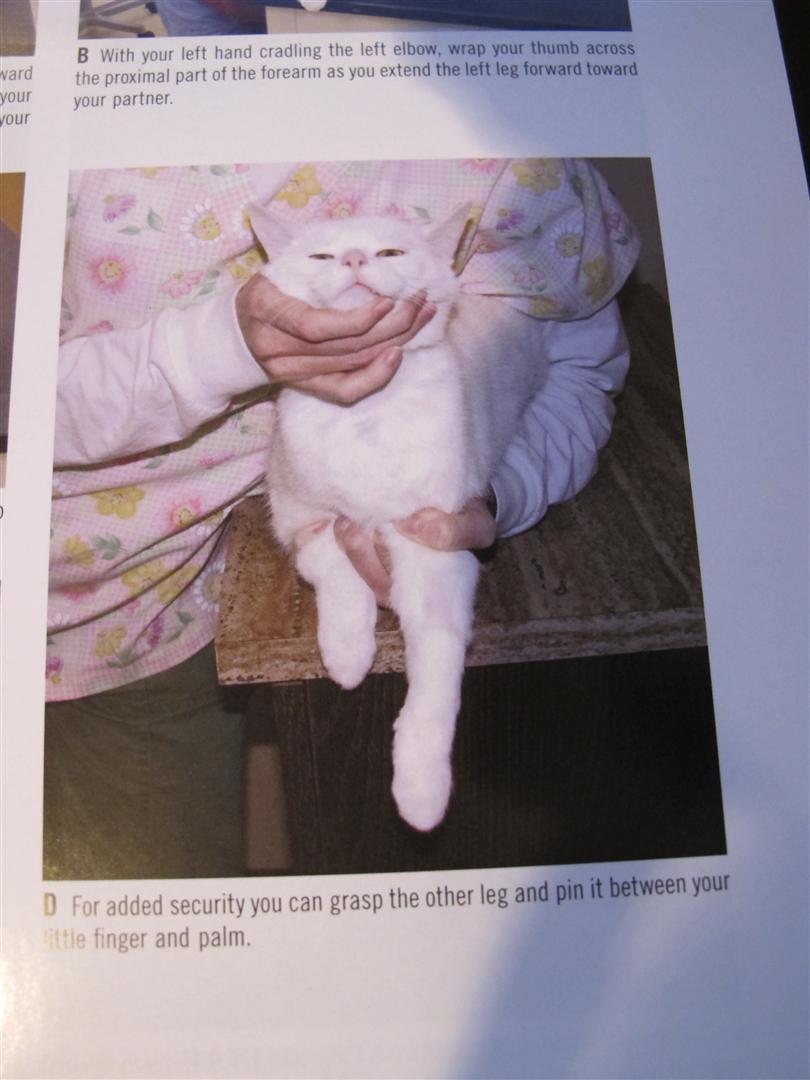
Hold a cat firmly by its head. This allows you to keep control and makes it very difficult for the cat to bite if you maintain your grip.

Lateral recumbency of a cat. Gently but firmly rest your arm on the cat's neck. This works for small-medium and even some easier to handle large dogs as well.

People will teach you to do this. Do not do this!! As with any other 'scruffing' method of restraint you have almost ZERO control of the cat's head and it's REALLY awkward to hold a cat like this if it's struggling...and even if it's not. It's also pretty uncomfortable for the cat and may piss it off more. I won't touch a cat if my restrainer is holding it this way.

Hold the front legs together with one finger in between. Rest your other arm across the cat/dog's back. For jugular blood draws, pull the cat's legs down over the edge of the table (do dog jugulars with the dog in a sitting position)
Basic restraint and lifting of a large dog (better grip with your 'head' hand though)

Shared restraint and lifting of a large dog (Always count...1..2..3..) before you lift

If the dog is nasty, as a lot of scared dogs at a shelter may be, trick them somehow to get a grip. This method works best for little terrors....I mean terriers.
